


Ragdoll City Playground
3.2273.00 Reviews
App Specs
- Version
- 1.6.0
- Updated On
- License
- Free
- Downloads
- 10,000,000+
- Developer
- Reggae True Love
- Categories
- Simulation
- Platform
- Android
Screenshots
 Analysis by AppCompare
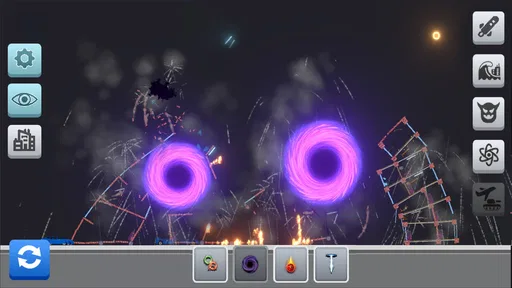
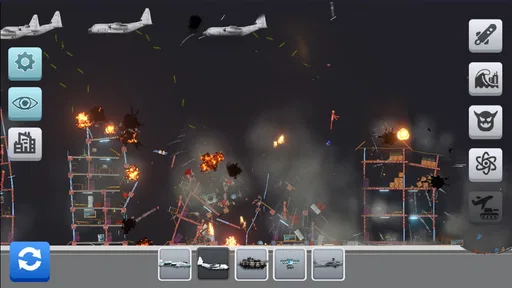
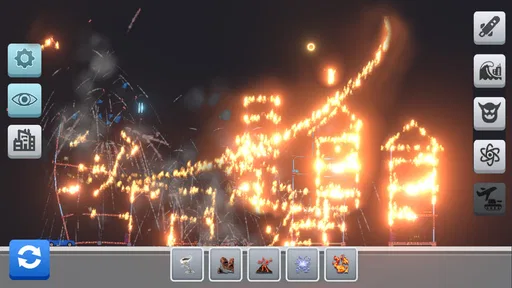
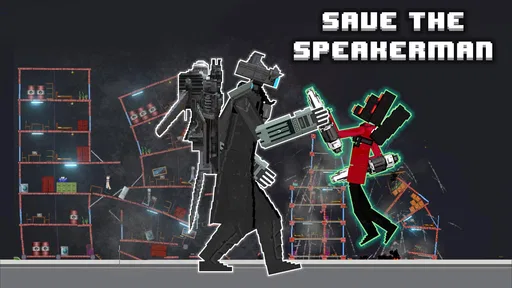
I approached Ragdoll City Playground as a casual simulation game rather than a traditional mission-based action title. Its appeal is the freedom to experiment in a city playground, watch ragdoll characters react to the environment, and create short moments of playful chaos without needing to follow a complicated story. That makes it easy to understand at a glance, although the experience is more about self-directed amusement than long-term progression.
Developed by Reggae True Love, the game is free to install and aimed at Everyone 10+. It has attracted over ten million installs, while its average rating sits at 3.3 from around eight thousand ratings. Those figures suggest a broad audience but also a divided response, which matches my impression: the central idea is immediately approachable, yet the enjoyment depends heavily on whether you like open-ended ragdoll experimentation.
How the playground feels to use
I’ll focus on how the city playground’s open-ended setup shapes a session, rather than treating it like a mission-driven game. In my experience, the useful trick is to give each experiment a small purpose of its own: that makes the freedom easier to enjoy and the results easier to read.
Readability and navigation in a busy city sandbox
The first thing I noticed is that the concept is easier to grasp than the interface details. You enter a city-themed space, identify the available objects and characters, and start testing what happens when you interact with them. There is no need to learn a deep simulation model before playing. For a younger player or someone who prefers visual learning, that low entry barrier is useful.
At the same time, a playground without a clear objective can feel visually noisy. Buildings, props, ragdolls, and movement compete for attention, especially when several things are happening at once. I found that the game works best when I treated each area as a small experiment instead of trying to understand the entire scene immediately. Focus on one character, one object, or one interaction first; then expand the setup once the controls feel familiar.
The city setting gives the game a stronger identity than a blank physics room, but it can also make navigation less obvious than in a compact puzzle game. Players who need very clear goals may wonder what they are supposed to do next. That is not necessarily a flaw for this genre, because the freedom is the point, but it does mean the game rewards curiosity more than task completion.
I would not describe the interface as demanding in the same way as a strategy simulation with many menus. The challenge comes from understanding the relationship between movement, placement, and physics. If you are reviewing it for a child, I would spend a few minutes playing alongside them first. That makes it easier to explain where to look and how to reset a messy scene when experimentation gets confusing.
Worth Reading Before You Choose

EA SPORTS FC Mobile 26 Is a Bigger Football Game, but It Takes Time

Flipboard Shows What News Apps Must Do Beyond the Feed

Switching to Android Auto Means Rethinking Your Driving Routine

Google Calendar Makes a Crowded Week Easier to Manage

Ludo King Makes the Most of the Minutes Between Plans

Baby Panda World Brings Quick Play to Modern Phones, but Its Game Library Feels Busy
Controls, timing, and motor demands
Ragdoll playground games usually invite repeated tapping, dragging, and repositioning, and that is how I approached this one. The experience is more forgiving than a precision platformer because there is no constant requirement to hit a narrow timing window. Missing an interaction generally becomes part of the experiment rather than an instant failure.
That said, “forgiving” does not mean effortless for everyone. Moving objects accurately can still require controlled touch, and crowded scenes may make it harder to select the intended character or prop. Players with limited fine-motor control may prefer slower, simpler setups instead of trying to manipulate several elements at once. A practical approach is to begin with a single ragdoll and a clear area, then add complexity only when the screen remains manageable.
The physics can be entertaining precisely because outcomes are unpredictable. A character may tumble in a way I did not expect, and that surprise is often the reward. For players who rely on consistent visual feedback, however, unpredictable motion may become tiring rather than funny. This is one of the important trade-offs: the same looseness that creates humorous scenes can reduce the sense of control.
I also think the game suits short touch sessions better than extended play for people who experience hand or wrist fatigue. Because the core loop is based on setting up and observing, there is no reason to rush through every interaction. I could pause between experiments, reduce the number of active elements, and treat the game as a sequence of small scenes rather than one long session.
Sensory balance and the value of quieter experiments
The visual appeal comes from movement and physical reactions, but a crowded playground can become intense. Several objects moving at once may make it difficult to follow the event that matters. My best results came from building scenes gradually: place one element, test it, clear the area, and only then attempt a larger setup.
This method is more than a personal preference. It creates a useful low-stimulation way to play without changing the game itself. Someone who is sensitive to visual clutter can focus on one interaction at a time. Someone who enjoys spectacle can do the opposite and create a more chaotic scene. The open-ended format gives both players room to choose their own level of intensity.
I would still avoid presenting it as a universally calm experience. The ragdoll theme and city destruction premise may be uncomfortable for players who prefer gentle, constructive simulations. The game’s humor comes from exaggerated physical mishaps, so its tone is not the same as a city-builder focused on planning, decorating, or community management.
For families, the Everyone 10+ rating is a useful starting point, but I would still consider the individual child. Age labels cannot tell you whether a player will enjoy the slapstick physics, tolerate the visual disorder, or understand that the scenarios are fictional play. Watching the first session together is more informative than relying on the label alone.
Playing in different everyday situations
This is a particularly good fit for short breaks. I could imagine opening it while waiting for an appointment, playing through one small setup, and closing it without feeling that I had abandoned a long campaign. The lack of a demanding narrative makes it easy to return after a gap because I do not need to remember a complicated chain of events.
It also works as a shared “what happens if…” game. Two people can take turns suggesting a setup and seeing whether the physics produce the expected result. That makes the title more social than its simple controls might suggest, even though the main interaction remains on one device. The best shared moments come from treating failure as the result, not as something to hide.
On the other hand, I would not choose it for a commute where I need reliable progress in tiny bursts, unless I am comfortable with purely self-directed play. A puzzle game gives clearer completion points, while a management game usually offers measurable development. Here, a session may end simply because I have seen enough amusing reactions.
It is also worth considering the environment around you. If you are playing in a noisy place or with limited attention, a physics sandbox can be easier to dip into than a story game, but the visual action may still demand more focus than a simple card or word game. In a quiet room, the freedom to test unusual combinations becomes much more rewarding.
What the current build means for expectations
The current version is 1.6.0, and the game has been available since September 10, 2023. I mention this because expectations matter with a free simulation title. I approached it as a compact playground for repeated experiments, not as a polished replacement for a large console physics sandbox.
There are in-app purchases ranging from $1.99 to $7.99 per item. The free entry point makes it easy to try the basic idea before spending anything, but I would keep the purchase structure in mind if a child is using the device. A parent should decide in advance whether optional purchases are acceptable and avoid treating the free download as proof that the entire experience is cost-free.
The large install base shows that the premise is easy for many people to discover, but popularity does not guarantee a match for every player. The lower average rating is a reminder to judge the game by its style. If you want a focused objective, a carefully balanced challenge, or a deep simulation economy, the city playground may feel thin. If you want quick, silly physics experiments, its simplicity becomes an advantage.
Where it compares well with other simulation choices
Compared with a traditional city-builder, this game removes the pressure of budgets, zoning, production chains, and long-term planning. I do not need to maintain a population or optimize a settlement. That makes it much more accessible as a five-minute diversion, but it also means there is less reason to return once the novelty of a particular scene wears off.
Compared with a physics puzzle game, it offers more freedom and fewer correct answers. A puzzle normally teaches a mechanic and asks me to solve a defined problem. Here, I am the person inventing the problem. That is excellent for creative play, but frustrating if I want the game to tell me whether I am progressing.
Compared with a conventional action game, the ragdoll focus changes the goal from winning fights or completing missions to observing reactions. Players who dislike fast reflex tests may appreciate the reduced pressure. Players who need responsive, precise control may find the loose physics less satisfying, because the most amusing outcome is not always the one they intended.
That comparison helped me place the game correctly. It is not a miniature version of every simulation genre. It is a playful physics toy with a city backdrop. Once I stopped expecting structured progression, I enjoyed the freedom more and noticed its limitations less.
Practical ways to make the experience easier to manage
My first useful tip is to start with controlled scenes. A single character and a small number of objects make it easier to see what caused a reaction. This is especially helpful for new players, people who find busy screens difficult to read, and anyone trying to learn the interaction model without unnecessary frustration.
My second tip is to use repetition deliberately. Instead of changing everything after an unexpected result, keep most of the setup the same and alter one element. That turns random-looking behavior into a simple experiment and gives the game more depth than merely causing maximum chaos.
A third tip is to create a stopping point before beginning. For example, decide that one session will contain three experiments or last until one particular setup has been tested. Open-ended games can otherwise become repetitive because there is no natural chapter break. A small personal goal gives the playground a sense of shape without forcing a formal mission system onto it.
Finally, I would play with purchase decisions separated from the fun of the free sandbox. Try the central interactions first and ask whether they remain enjoyable after the initial surprise. If the answer is no, additional items are unlikely to solve the underlying mismatch. If the answer is yes, optional spending becomes a choice about extending that style of play rather than a requirement to understand it.
Who should choose it, and who should skip it
I would recommend this game to players who enjoy ragdoll physics, absurd outcomes, and making their own entertainment. It is also a reasonable choice for families looking for a simple simulation that can be explored together, provided an adult is comfortable with the game’s slapstick tone and supervises purchases where necessary.
It may suit someone who has limited time but still wants an interactive distraction. The ability to create a small scene, observe it, and leave makes it less demanding than a campaign-based game. It can also be a good creative prompt: invent a scenario, test it, and compare the result with your prediction.
I would skip it if your priority is a calm city-design experience, a structured physics curriculum, or a strong progression system. I would also be cautious if unpredictable motion, visual clutter, or repeated touch interactions are tiring for you. In those cases, a turn-based simulation, a puzzle with fixed layouts, or a slower builder may provide clearer feedback and less sensory uncertainty.
My inclusive verdict is mixed but positive. The most accessible way to enjoy it is to control the complexity of the scene yourself. That flexibility helps players with different attention spans and comfort levels, even though it does not remove every barrier. The game is easiest to approach when expectations are modest: it is a free, open-ended ragdoll playground, not a deep city simulator.
After spending time with it, I see why the title has reached a wide audience and why opinions remain uneven. The premise is instantly understandable, the short-session format is convenient, and the physics can produce genuinely funny surprises. The trade-off is that the same freedom can feel directionless, while busy scenes and imprecise outcomes may not work for every player.
For me, the deciding question is simple: do you enjoy creating small experiments just to see how a virtual city and its ragdolls respond? If yes, this is worth trying at its free price. If you need clear goals, reliable control, or substantial long-term development, I would choose a more structured alternative instead.
Pros
- Creative sandbox encourages experimentation with physics and objects.
- Simple controls make it easy to start playing without a tutorial.
- Large playground areas offer plenty of room for chaotic experiments.
- Ragdoll reactions create funny and unpredictable moments.
- Works well for short
- casual play sessions.
Cons
- Gameplay can become repetitive once most objects and interactions are discovered.
- Physics may occasionally behave inconsistently or produce awkward animations.
- Some content or tools may require watching ads or making purchases.
- The game may feel too violent or chaotic for younger children.
- Performance can drop on older phones during busy scenes.
FAQs for Ragdoll City Playground
What is Ragdoll City Playground?
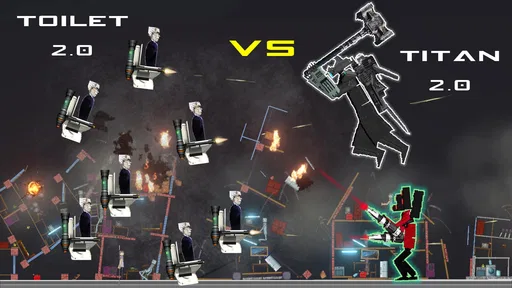
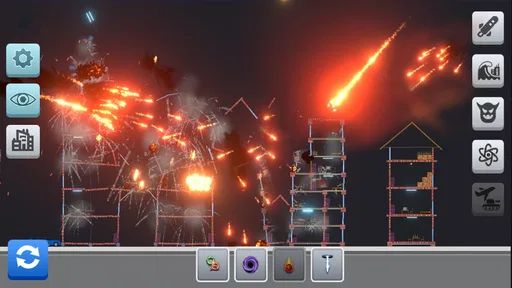
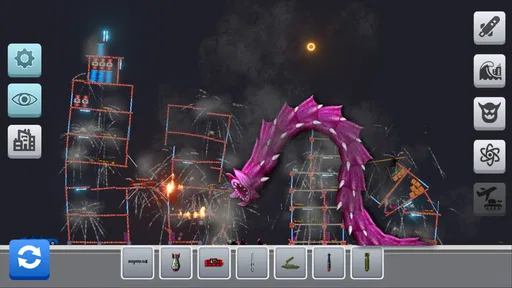
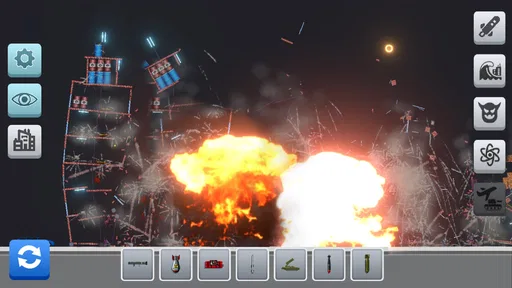
Ragdoll City Playground is a physics-based sandbox game where you can experiment with ragdoll characters, vehicles, objects, and destructive environments. Instead of following a traditional story or completing fixed missions, you are free to create scenes, test collisions, build chaotic situations, and interact with the city playground. The main appeal is open-ended experimentation rather than structured gameplay.
How does the gameplay work in Ragdoll City Playground?
The game generally revolves around selecting characters and objects, placing them around the city, and interacting with the environment using physics-based tools. You can move ragdolls, trigger accidents, use vehicles, and arrange different elements to see how they react. Controls are designed for touchscreens, although the number of available actions may take some time to learn, especially for new players.
Is Ragdoll City Playground suitable for children?
Ragdoll City Playground has a cartoon-style presentation, but its gameplay focuses on crashes, falls, destruction, and exaggerated ragdoll reactions. Parents should review the store rating, in-app content, advertisements, and privacy information before allowing younger children to play. It does not appear to be an educational game, so suitability will depend on a family’s comfort with physics-based violence and chaotic scenarios.
Does Ragdoll City Playground require an internet connection?
The core sandbox experience may be playable without a constant internet connection, which is useful when you want to experiment offline or play while traveling. However, certain features may depend on connectivity, including advertisements, optional purchases, updates, cloud-related functions, or newly added content. It is best to launch the game once while connected and check which features remain available in offline mode.
Is Ragdoll City Playground free to download?
Ragdoll City Playground may be available as a free download, but the overall experience can include advertising, optional in-app purchases, or restrictions on some content depending on the version installed. Before downloading, check the official Google Play or App Store listing for the current price, supported devices, permissions, and purchase details. Availability and features can vary between Android and iOS.


